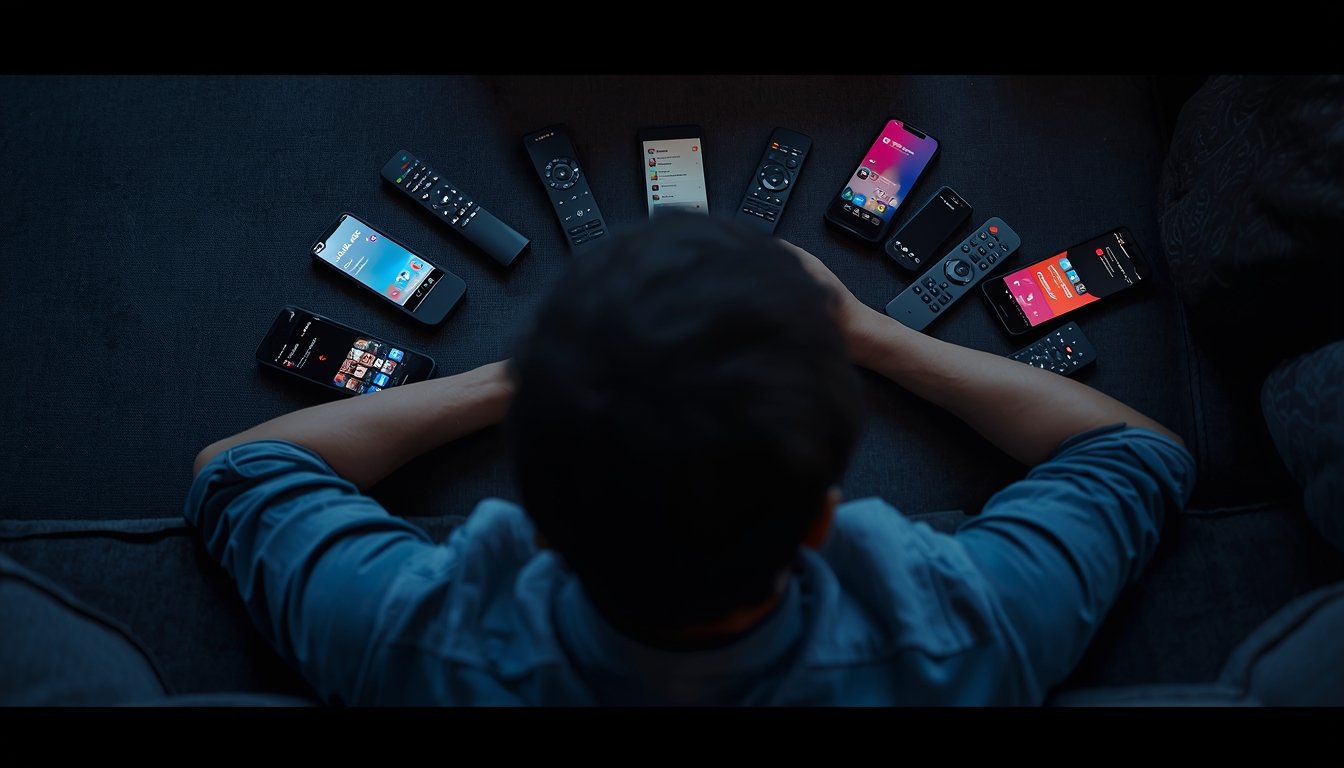
Rising prices, fragmented content libraries, and algorithmic overload have pushed many viewers toward selective consumption.
This report analyzes how and why users are reducing their streaming commitments.
This study forms part of our comprehensive industry overview,
The State of Streaming 2026.
Understanding Subscription Fatigue
Subscription fatigue refers to the psychological and financial exhaustion caused by maintaining multiple recurring digital services.
In streaming, this phenomenon is amplified by overlapping catalogs and escalating costs.
Users increasingly question whether continued access justifies monthly payments.
The Cost Escalation Problem
Between 2022 and 2026, average household streaming expenditures increased steadily.
Premium tiers, ad-free upgrades, and add-on packages have reshaped pricing structures.
This trend is discussed further in
Netflix’s 2026 pricing analysis and
Prime Video’s hybrid model review.
Fragmentation and Content Overlap
Exclusive licensing agreements have scattered popular franchises across competing platforms.
Viewers must now subscribe to multiple services to follow a single genre or universe.
Disney+’s franchise-centric strategy illustrates this dynamic:
Disney+ in 2026.
Algorithmic Overload
Recommendation systems are designed to maximize engagement.
However, excessive personalization can overwhelm users with irrelevant or repetitive suggestions.
The technological foundations of these systems are examined in
How AI Quietly Runs Streaming in 2026.
Rotation Behavior and Temporary Subscriptions
Rather than maintaining permanent subscriptions, users increasingly rotate between platforms.
Services are activated around flagship releases and canceled afterward.
This behavior mirrors patterns identified in
Why Viewers No Longer Stay Loyal.
Demographic and Regional Variations
Subscription fatigue manifests differently across age groups and regions.
Younger audiences prioritize flexibility, while older viewers favor stability.
Emerging markets display higher churn sensitivity due to income volatility.
Platform Responses
Ad-Supported Tiers
Most major platforms have introduced ad-supported plans to retain price-sensitive users.
Bundling Initiatives
Partnership bundles seek to reduce churn by consolidating services into unified offerings.
Content Rationalization
Platforms are trimming underperforming projects to control costs.
Psychological Drivers
Subscription fatigue is not purely financial.
Decision overload, content guilt, and perceived underuse contribute significantly.
Many users report stress associated with “unused subscriptions.”
Predictions for 2027
- Increased reliance on rotating subscriptions
- Growth of unified subscription bundles
- Expansion of ad-supported models
- Stricter household budget allocation
- Higher churn tolerance among platforms
Conclusion
The Subscription Fatigue Index 2026 reveals a structural shift in how audiences interact with streaming services.
Viewers are no longer passive subscribers.
They are strategic consumers balancing cost, content, and convenience.
Understanding this shift is essential for platforms seeking long-term sustainability.
For broader industry context, revisit
The State of Streaming 2026.