The Quiet Revolution Behind the Screen
In 2026, most viewers never notice how deeply AI influences the shows they watch.
From early script development to post-production optimization, artificial intelligence now operates at every stage of content creation.
AI in Script Development and Story Planning
Streaming platforms increasingly rely on AI-powered tools to analyze audience behavior.
These systems evaluate:
- Popular narrative structures
- Character engagement patterns
- Genre performance trends
- Viewer drop-off points
Writers now receive data-driven feedback before production even begins.
Automated Editing and Post-Production
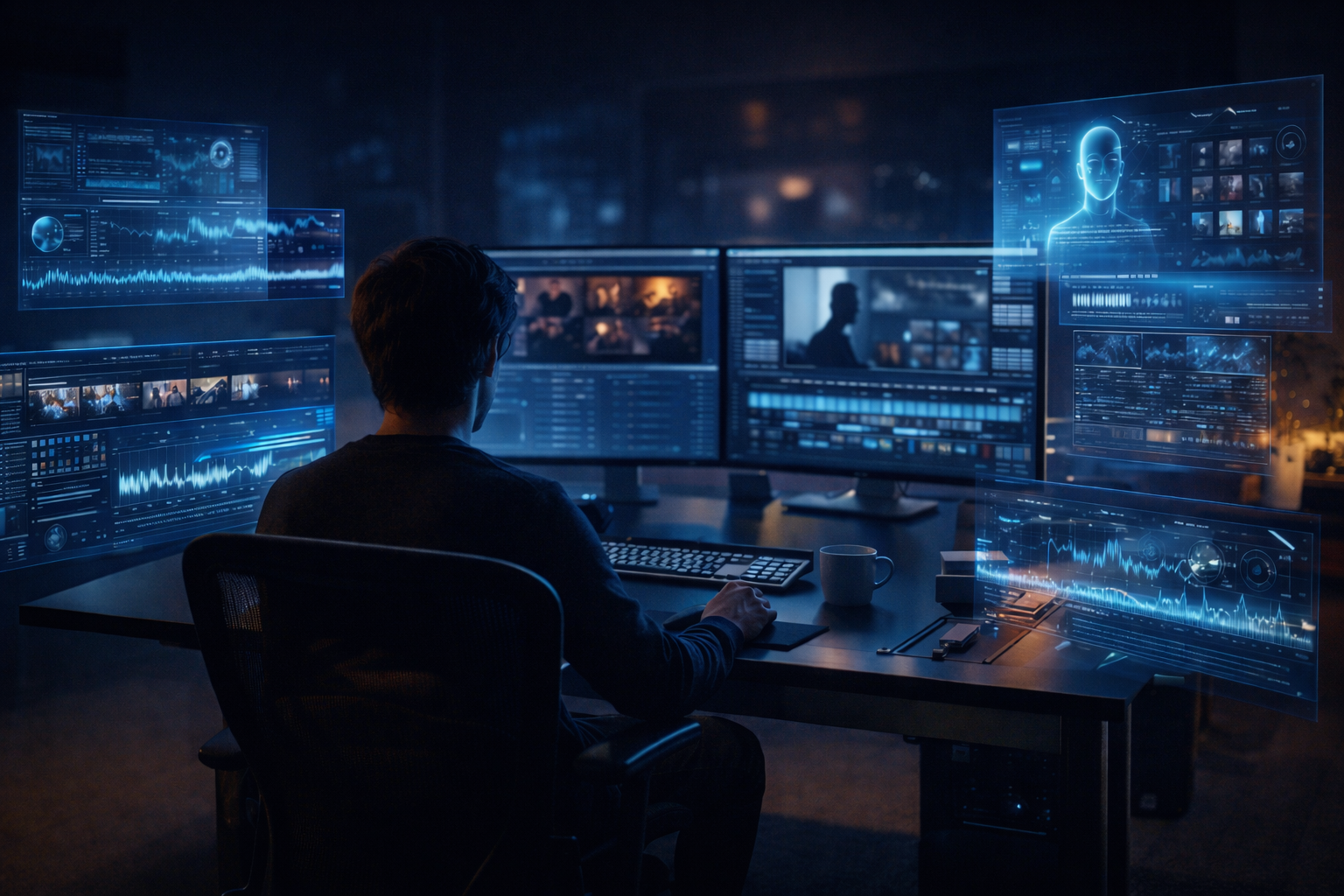
Post-production has been transformed by machine learning.
AI-assisted editing tools can now:
- Detect emotional peaks
- Optimize pacing
- Balance dialogue and music
- Suggest scene trims
This reduces costs while accelerating release schedules.
Virtual Production and Synthetic Performers
AI-generated environments and digital doubles are becoming standard.
Studios use virtual actors for background scenes, stunts, and international localization.
This expands creative flexibility while raising ethical questions.
Predictive Audience Modeling
Modern recommendation systems do more than suggest content.
They predict how specific shows will perform before launch.
Platforms simulate viewer reactions using behavioral models trained on massive datasets.
Localization at Machine Speed
AI-driven dubbing and subtitling now reach near-human quality.
Shows can be localized into dozens of languages within days.
This accelerates global distribution and reduces regional delays.
Creative Risks and Algorithmic Conservatism
While AI improves efficiency, it also encourages safe decisions.
Data-driven production favors proven formats.
This risks long-term creative stagnation.
The Human-AI Collaboration Model
Successful studios treat AI as an assistant, not a replacement.
Human intuition remains essential for:
- Emotional depth
- Original concepts
- Cultural relevance
- Moral complexity
Economic Impact on the Industry
AI reduces production costs but increases technological dependency.
Smaller studios gain access to advanced tools, while major platforms consolidate data advantages.
What Comes Next
By 2030, most content pipelines will be hybrid systems.
Human creativity and machine optimization will coexist.
The platforms that balance both will dominate the next decade.
Our State of Streaming 2026 analysis highlights how technology now shapes creative and financial decisions.
Final Thoughts
AI is not replacing storytellers.
It is redefining how stories are built, tested, and delivered.
Understanding this shift is essential for anyone following the future of streaming.